
"By and large, the biggest benefit is just having more grass".
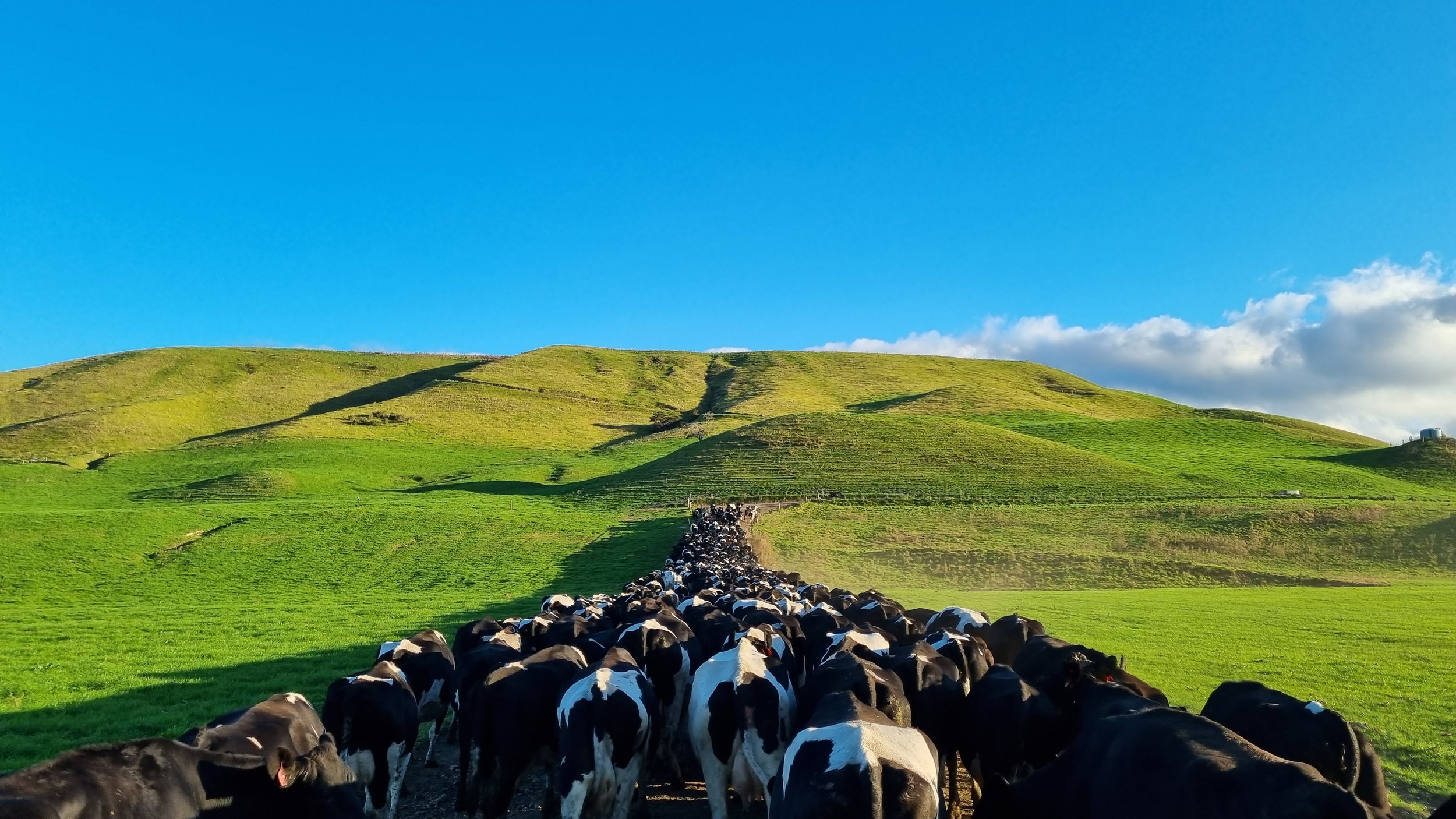
How Hawke’s Bay farmer Lewis Knauf used Tnue Controlled Release Technology to solve a winter feed problem, and hasn't looked back
Lewis Knauf is not the kind of farmer who experiments on a whim. On a 770-hectare multi-generational farm in Kereru, west of Hastings, he and his family run 1,700 cows across a split-calving system that demands feed twelve months of the year. When you’re milking 900 cows through June, running out of grass is not an option - and buying in supplements is expensive.
So, when Lewis started using Tnue's Controlled Release Technology (CRT) in 2019, it was not out of curiosity. It was to solve a specific problem.
“Winter grass is really important for us. We have cows milking through winter - around 1,000 of them this month (June). Having grass growth over winter is critical. We can’t run out of feed; it’s very costly to have to buy supplements.”

The Knauf family on the farm (Lewis far right)
The problem with standard urea in Hawke's Bay.
Before switching to controlled release nitrogen (N), Lewis was applying urea up to six times a year - following cows from September through December and making another one to two passes in autumn. That meant bringing a truck to the farm six times a season, and with each visit came a familiar headache: the weather.
Hawke's Bay weather is notoriously variable. Lewis had learned about optimal N application the hard way, watching applications leach away after unexpected downpours, or holding back in uncertain conditions and then losing the growth window entirely.
“Applying slow-release in autumn or summer takes the guessing out of it,” he says. “You stop asking: is the forecast right, should I book the truck for this day, how many millimetres will we actually get? With controlled release, if there’s moisture there, it will release and the grass will take it up as it needs”
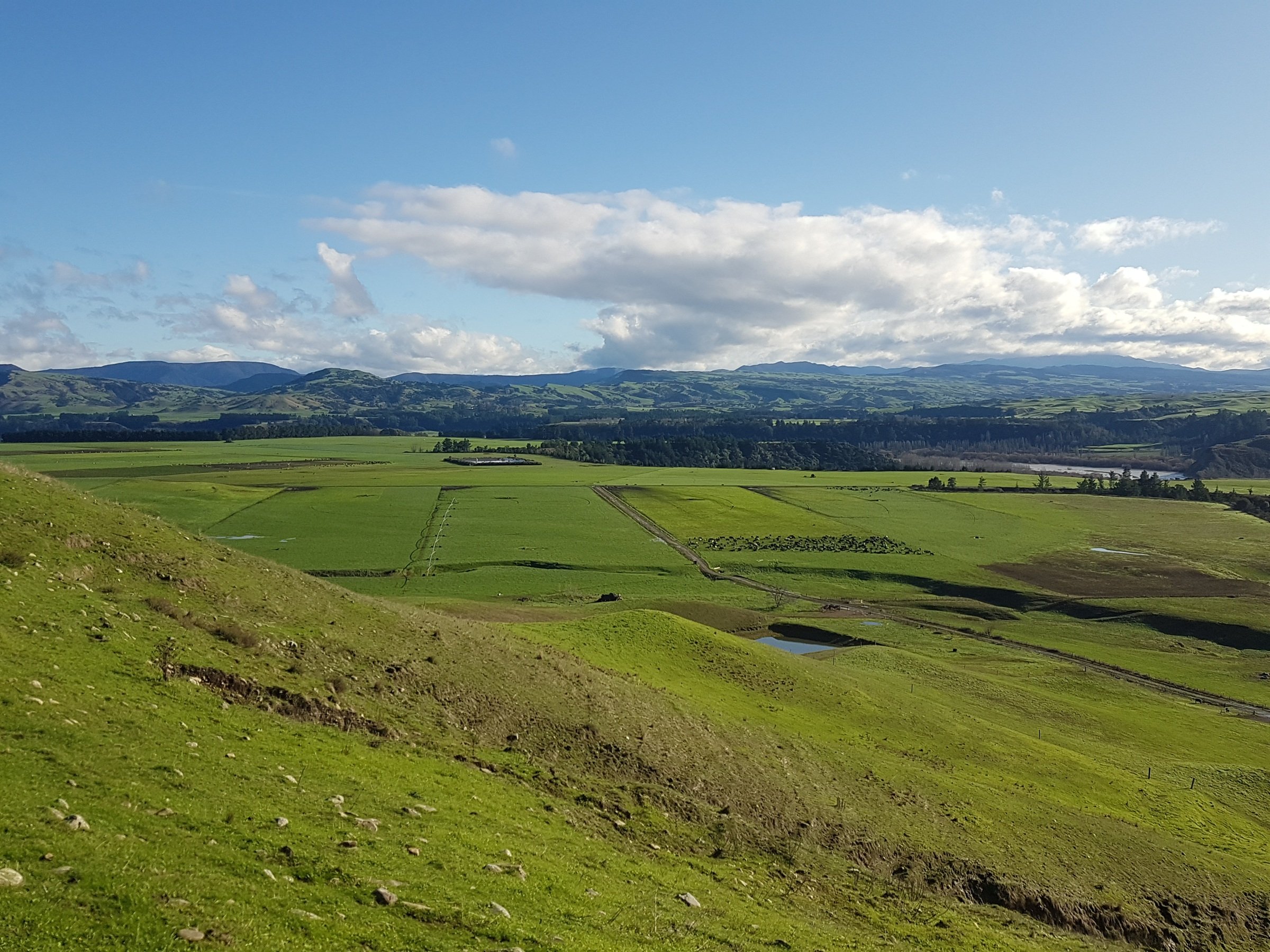
View over Wairua Dairies, near Kereru
The results: more grass, less guesswork.
Lewis's first trial in 2019 kept his $/ha spend the same as urea - which meant lower kgN/ha overall - and still produced an extra 0.5 tDM/ha of grass through winter and spring. That was enough to convince him to scale up and start adding the Tnue product to his fertiliser schedule.
Seven years on, the numbers tell the story. Winter grass growth: 20kg per hectare up to 25kg. Daily feed per cow: 3kg up to 4kg. And with more N lifting grass protein, cows that used to need protein supplements through winter are now meeting their requirements from pasture.
He estimates controlled-release N delivers roughly 85–90% N uptake efficiency year-round, compared to around 65% for standard urea at temperatures above 12°C. "I don't have rigorous trial data for that," he says, "but it's consistent with what I'm seeing in the model."
“By and large, the biggest benefit we see is just having more grass.”
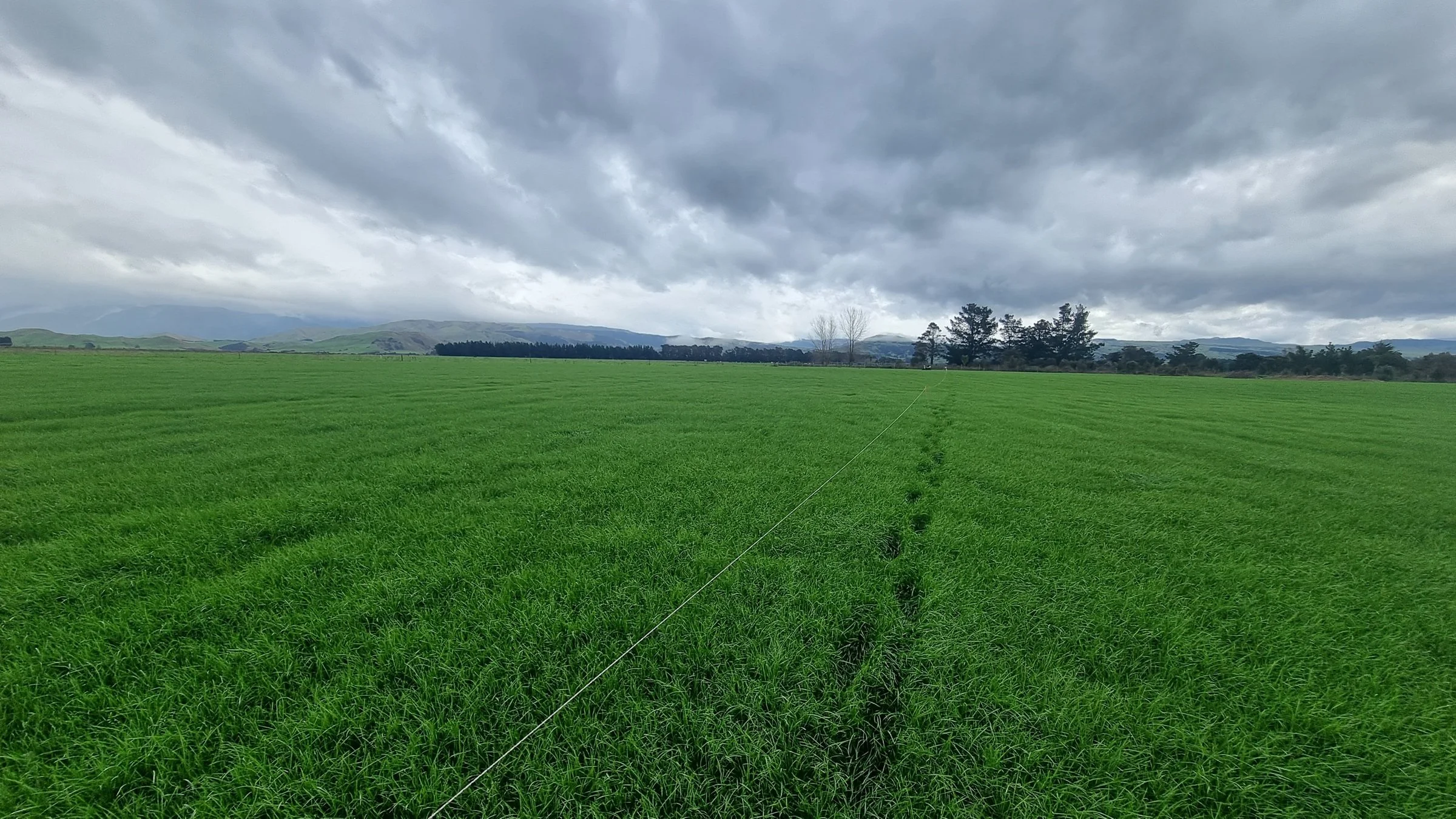
Wairua Dairies pasture
Last season was one of the Hawke’s Bay’s driest on record, but Lewis’ pastures still pushed out 14.5 tDM/ha, a full tonne above his 13.5 tDM/ha long-term average. Lewis admits that hybrid ryegrass, which he's been introducing for the past three years, has helped lift production, too. It’s been a combination, but the controlled release N has undoubtedly improved yields, and you can’t underestimate the impact of reducing stress around applications.
As for price - the cost per kilogram of dry matter came out roughly the same as urea, and he's still growing an extra tonne per hectare. Across 300 hectares of dairy platform pasture, that's 300 tonnes he's not buying in from somewhere else.
“Imported feed costs at least double what homegrown pasture does. So growing more on farm, even at a similar cost per kilo, is what drives income per hectare.”
Understanding how it works - and working with it.
Getting the most out of controlled-release N took Lewis some trial and error. After scaling up the trial, he started seeing grass dying in urine patches in November and December. The culprit was a July application that had been slowly releasing through winter and was still pushing out N in October, once soil temperatures lifted above 12°C, right on top of his usual September/October urea. Two applications were compounding into an N peak at exactly the wrong time.
Lewis went back to Tnue, checked the temperature-release profiles, and worked them into his farm model. What he found was that the Tnue controlled release technology doesn't behave the same all year. In the warmer months, October through April, it releases over roughly 90 days. Outside that window, it slows right down. As a rule of thumb, it tracks pretty closely with white clover growing periods.
That changed how he approached the whole programme. He kept his September/October urea application but cut back, or cut out entirely, his late October through December applications, because that's when the autumn Tnue is still doing its job.
Now the fert trucks are on the farm three times a year instead of six.
“I pick a day when it’s not going to rain so we don’t make a mess with the truck, apply it to the whole farm, and then forget about it,” he says. “With the Tnue product, you need to be thinking three to six months ahead - it’s not complicated, but it’s different to how you think about urea.”
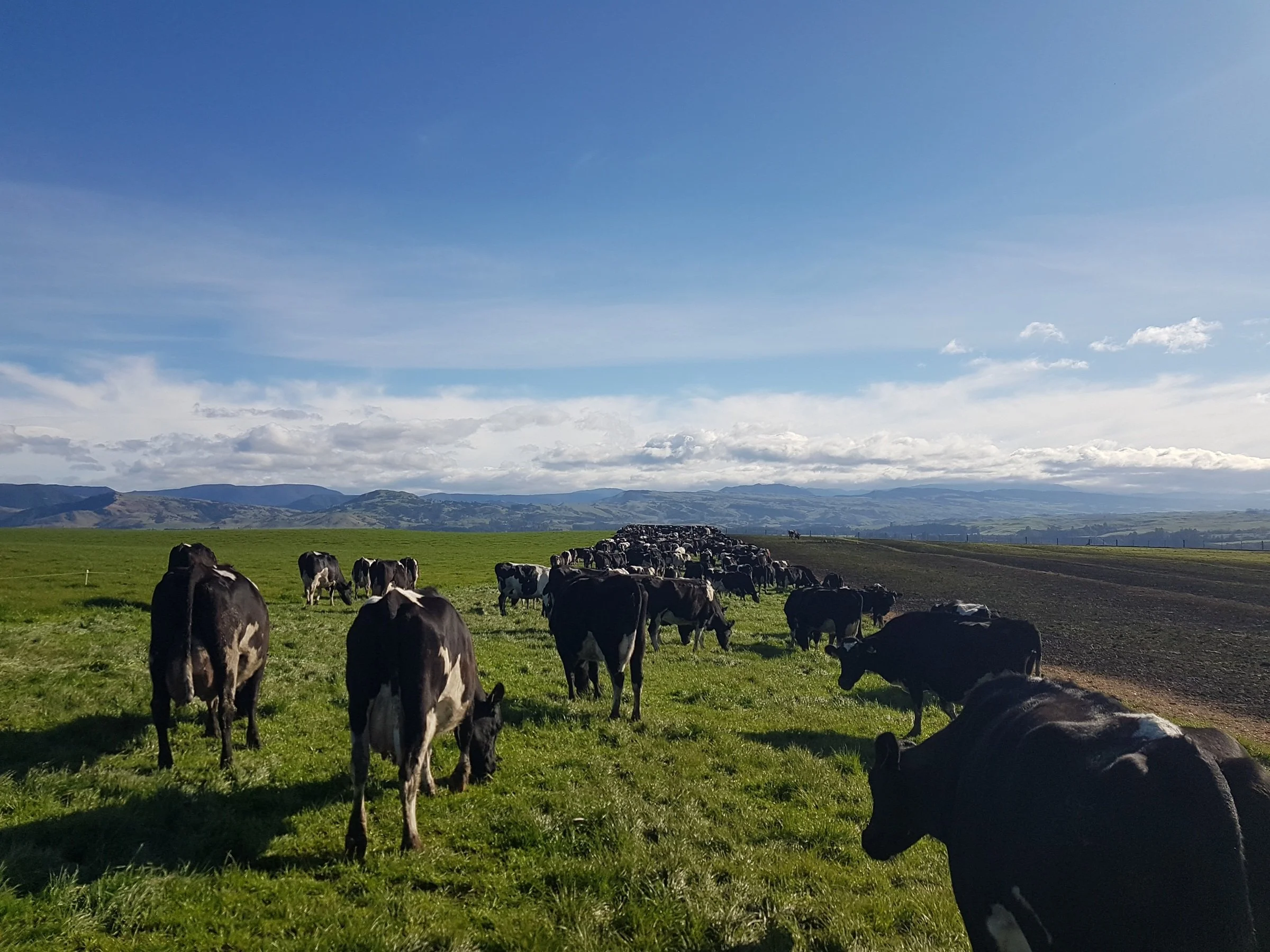
Wairua Dairies cattle
Confidence on the environmental side.
“I’m confident we’re losing less N. Even if there’s a leaching event, there isn’t that much N in the soil anyway. And once it dries up again, there’s more to be released.”
Standard urea dissolves within a day of moisture contact, creating a race between plant uptake and leaching. On Lewis's dairy platform - a medium silt-loam over red gravel - it takes around 200mm of rain to push N below the root zone, which is roughly two and a half months of average rainfall hitting at once. A single heavy event after a urea application can move N past the roots before the pasture has a chance to capture it.
With controlled-release N, at most 20% of the applied N diffuses in the ten days immediately after application. If a leaching event follows, there's simply not much soluble N in the soil at risk.
For farmers navigating increasing environmental scrutiny, that's a meaningful shift - not just as a compliance story, but as a practical one. N that stays in the root zone grows grass. N that leaches is money lost.
Every farm and farmer is different, but where growing grass is the goal, where winter feed is what keeps you up at night, and where you are trying to prevent leaching, Lewis says using the Tnue controlled release technology is not a hard conversation.
Seven years of results on a demanding, high-production Hawke's Bay dairy farm suggest he's on to something.
“If your philosophy is to grow as much grass as possible, then this is your product to do it.”
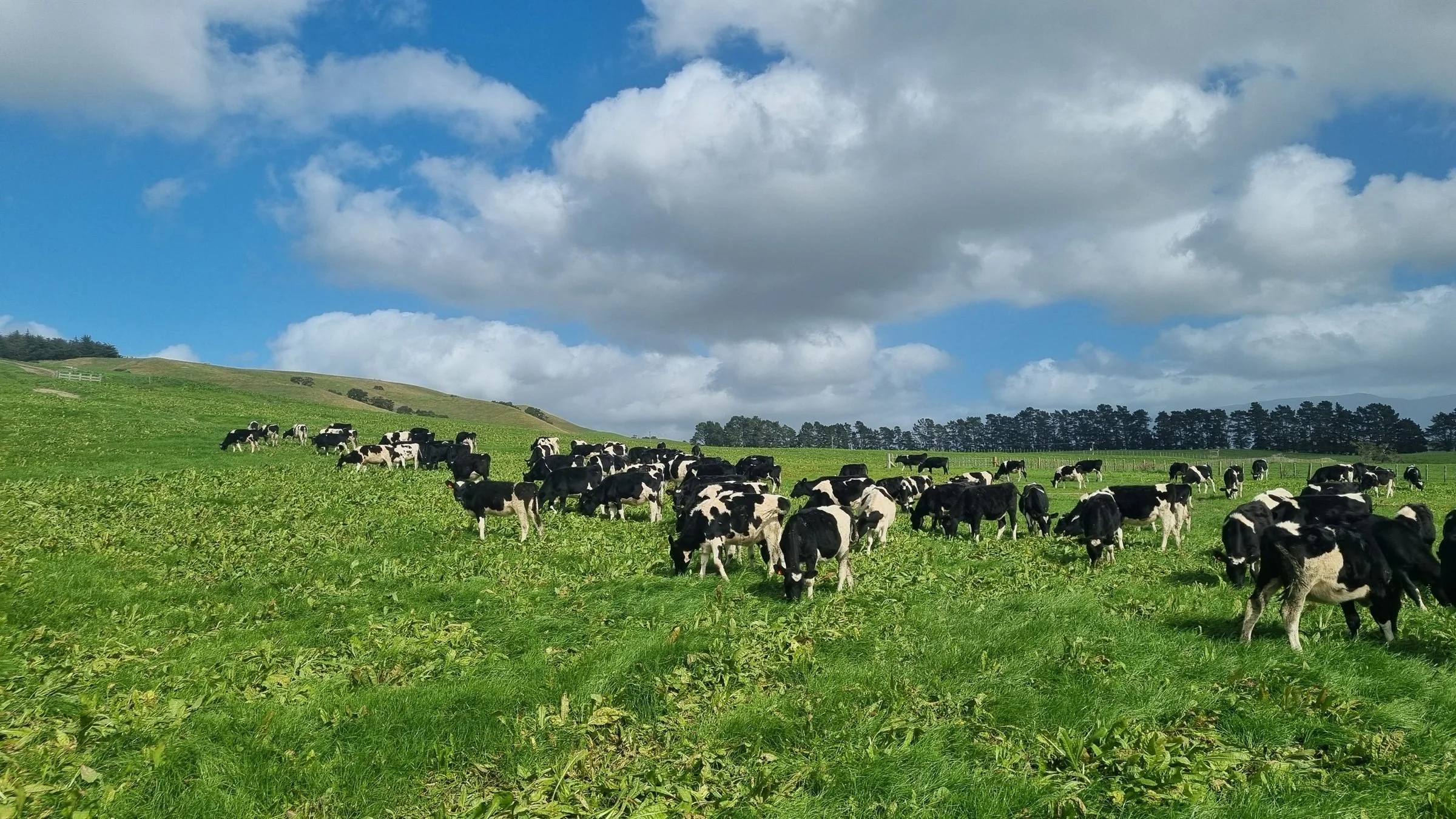
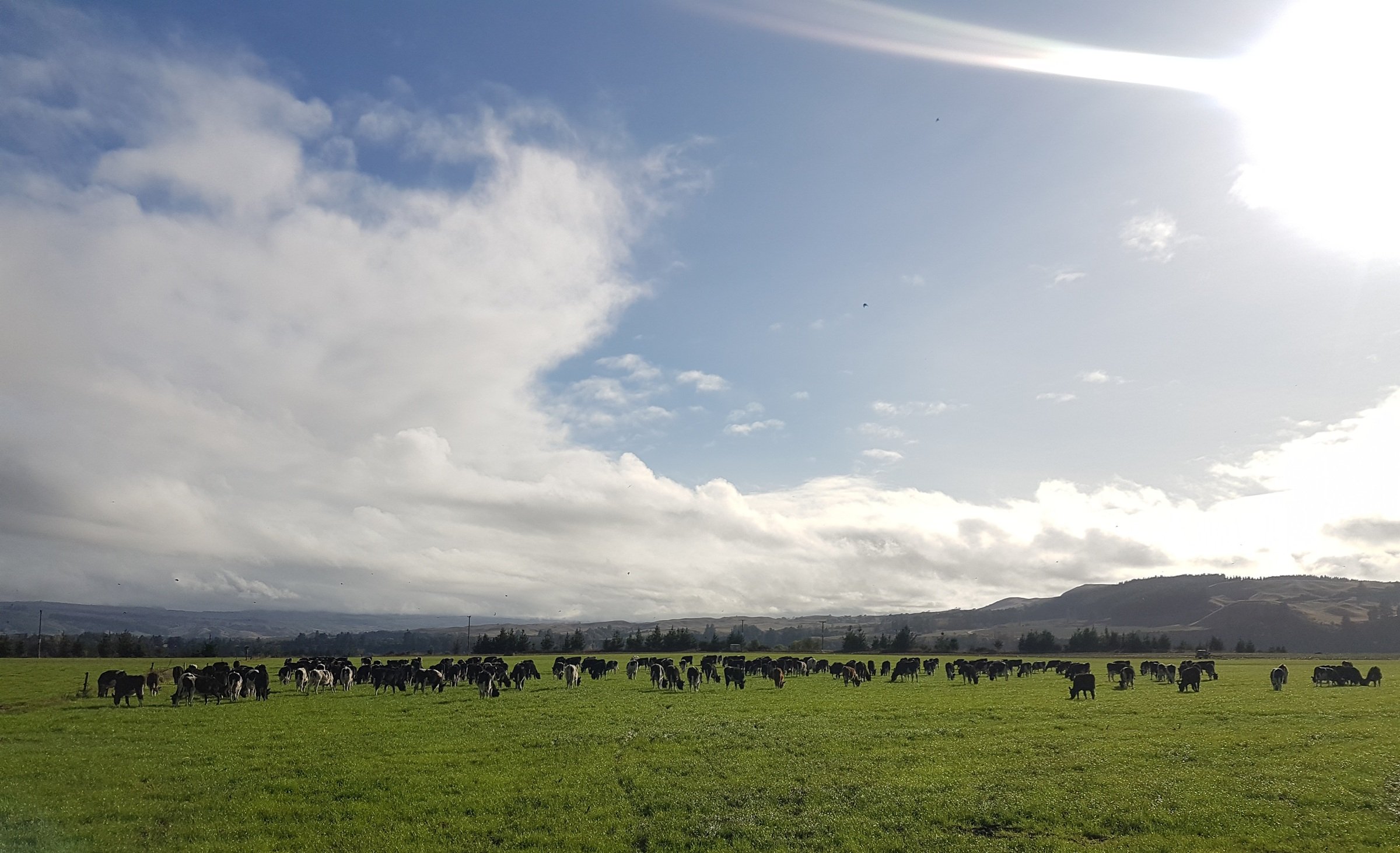
Cattle grazing at Wairua Dairies
Lewis Knauf is Operations Manager at Wairua Dairies, the Knauf family dairy farm in Kereru, Hawke's Bay - a multi-generational 770ha operation running 1,700 cows on a split-calving system.
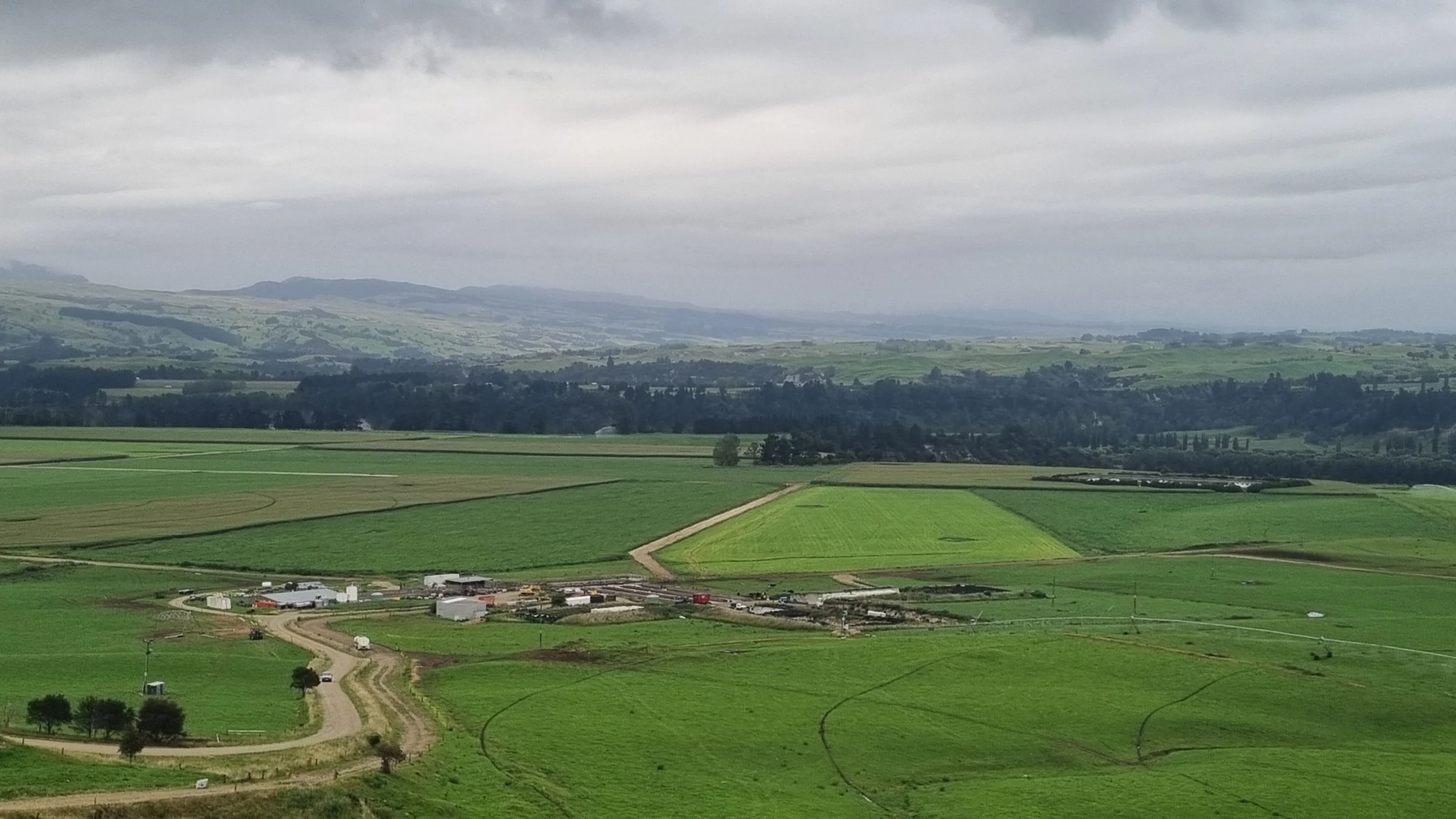
Wairua Dairies, Kereru, Hawkes Bay
Want to know if Tnue CRT is right for your system?
Talk to your fertiliser rep, or get in touch to learn more.
